Why did cars break community?
Not the car itself — the world we rebuilt around it. A sourced look at how car-dependent design quietly thinned the everyday ties that make a place a community. Real citations below; the argument is labeled opinion. Cars are useful — this is about the parking lot where the porch used to be.
The record (look it up)
In a now-classic 1971 study, urban designer Donald Appleyard compared three near-identical San Francisco streets that differed only in traffic. Residents of the light-traffic street had on average three times as many friends and twice as many acquaintances on their block as those on the heavy-traffic street. Same houses, same rents — the cars were the variable.
Source: Donald Appleyard, "The Environmental Quality of City Streets" (1972) & Livable Streets (1981).
In Bowling Alone, political scientist Robert Putnam tracked the long decline of American civic life and found commuting is a measurable drag on it: every extra ten minutes of daily commute cuts involvement in community affairs by roughly 10%. Time in a car alone is time not on a porch, at a meeting, or at a kid's game.
Source: Robert D. Putnam, Bowling Alone: The Collapse and Revival of American Community (2000).
Jane Jacobs argued a neighborhood's safety and life come from ordinary people naturally present on busy, mixed sidewalks — "eyes on the street." Postwar planning did the opposite: separated homes from shops, widened roads, and replaced the walkable block with the drive-everywhere subdivision. You can't bump into a neighbor at 35 mph.
Source: Jane Jacobs, The Death and Life of Great American Cities (1961).
The 517, photographed
Not stock photos. These are real, shot by the curator on foot in Lansing, MI — the argument above, standing in the open air.
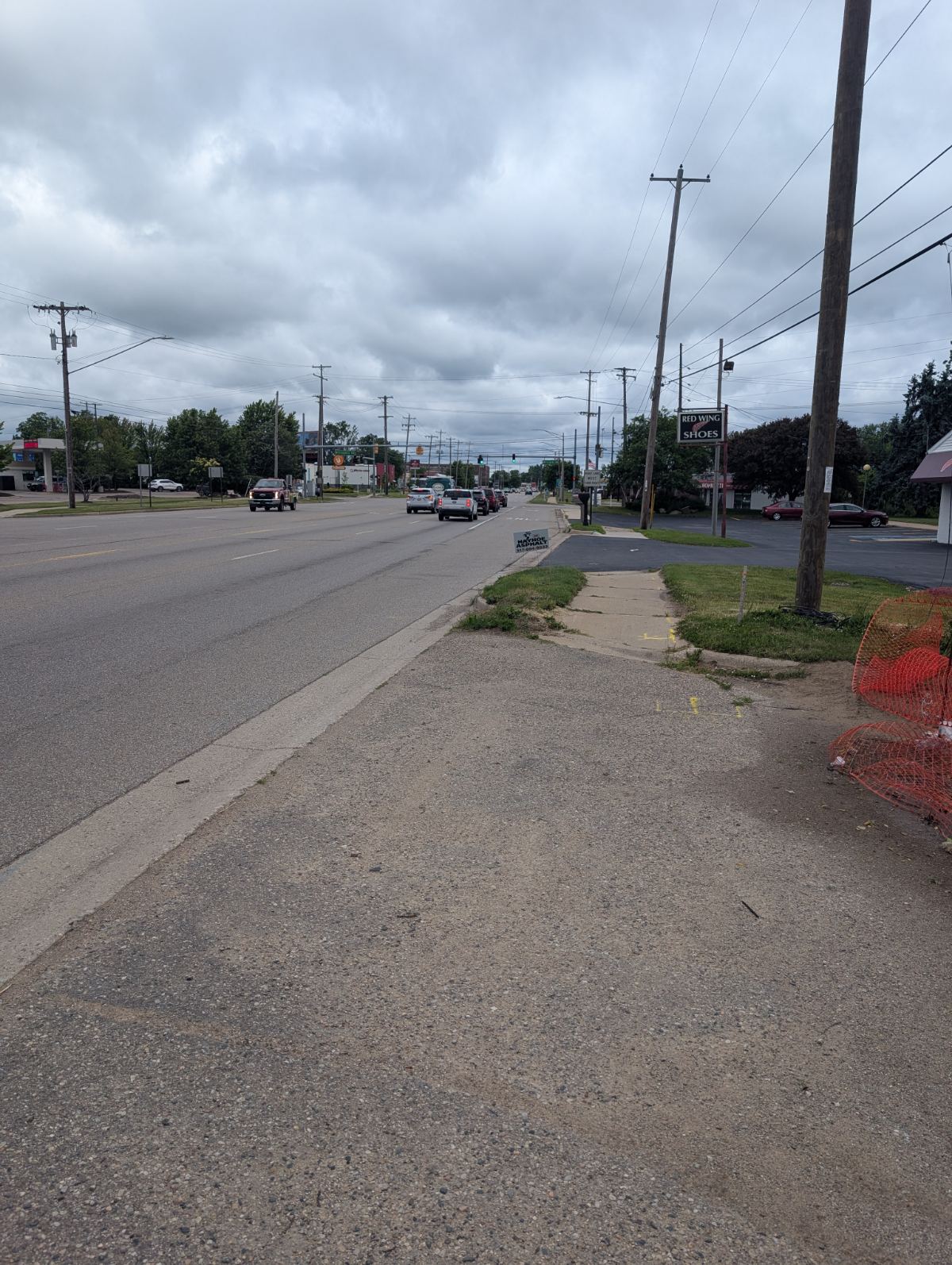
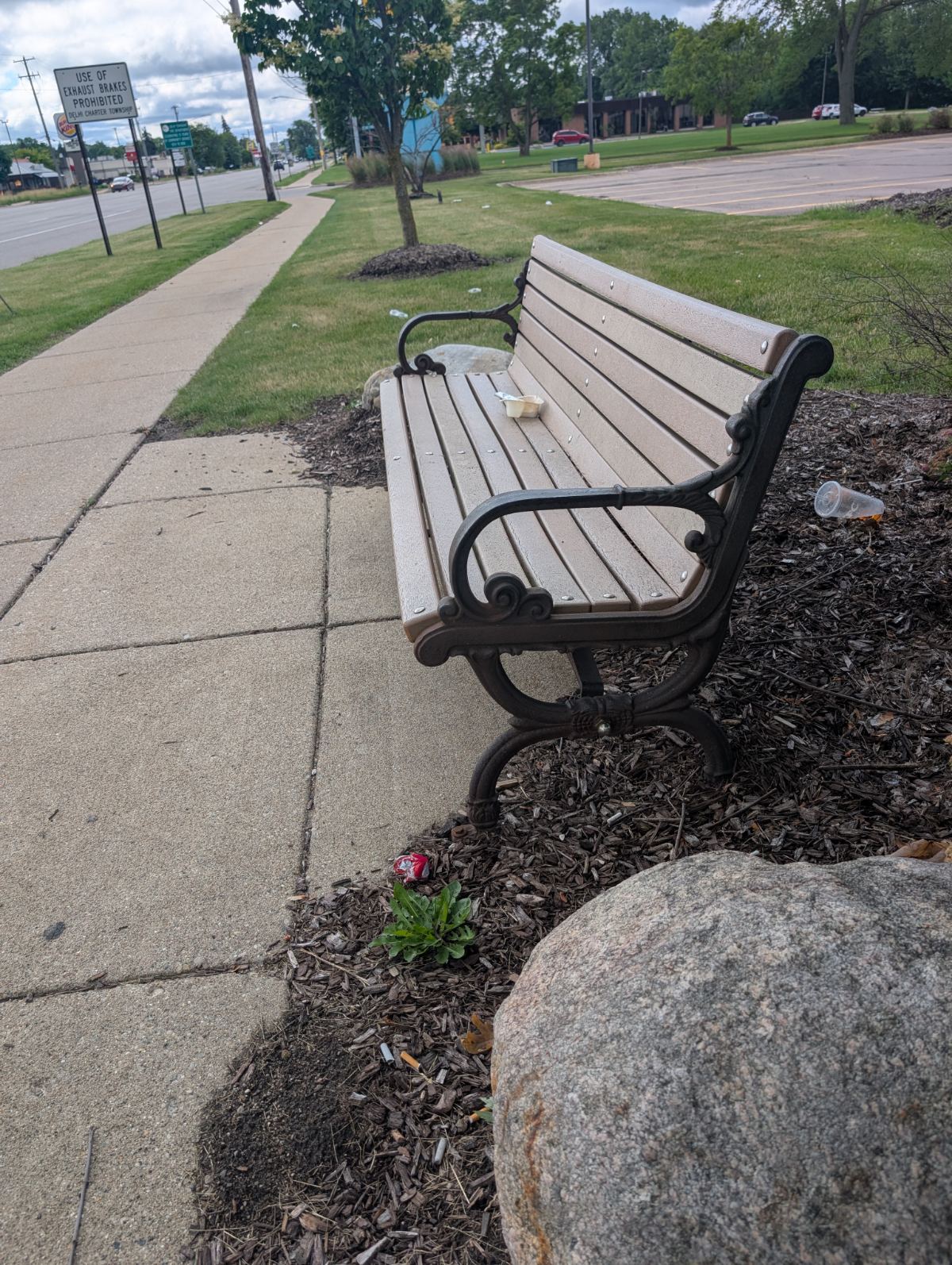
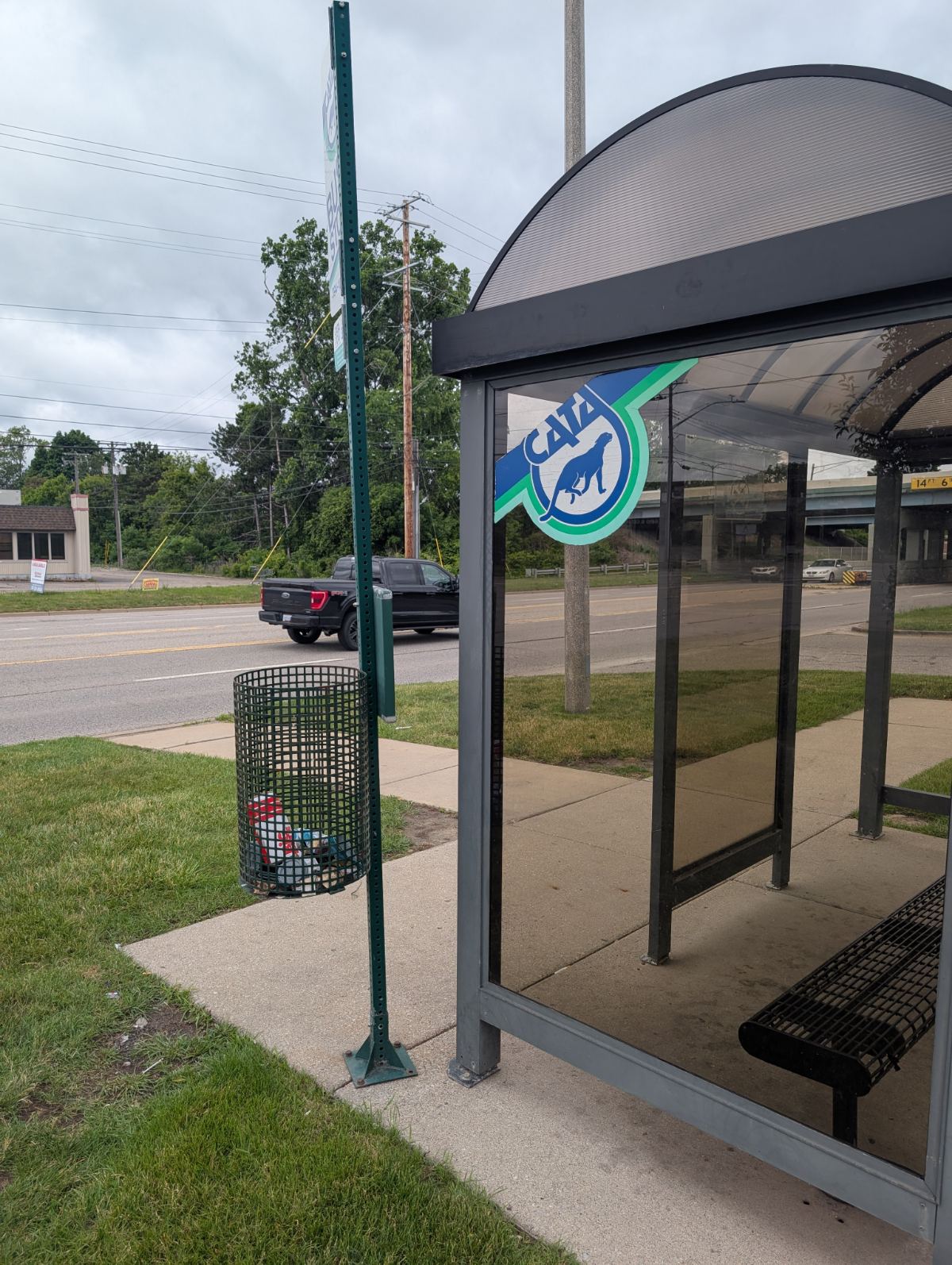
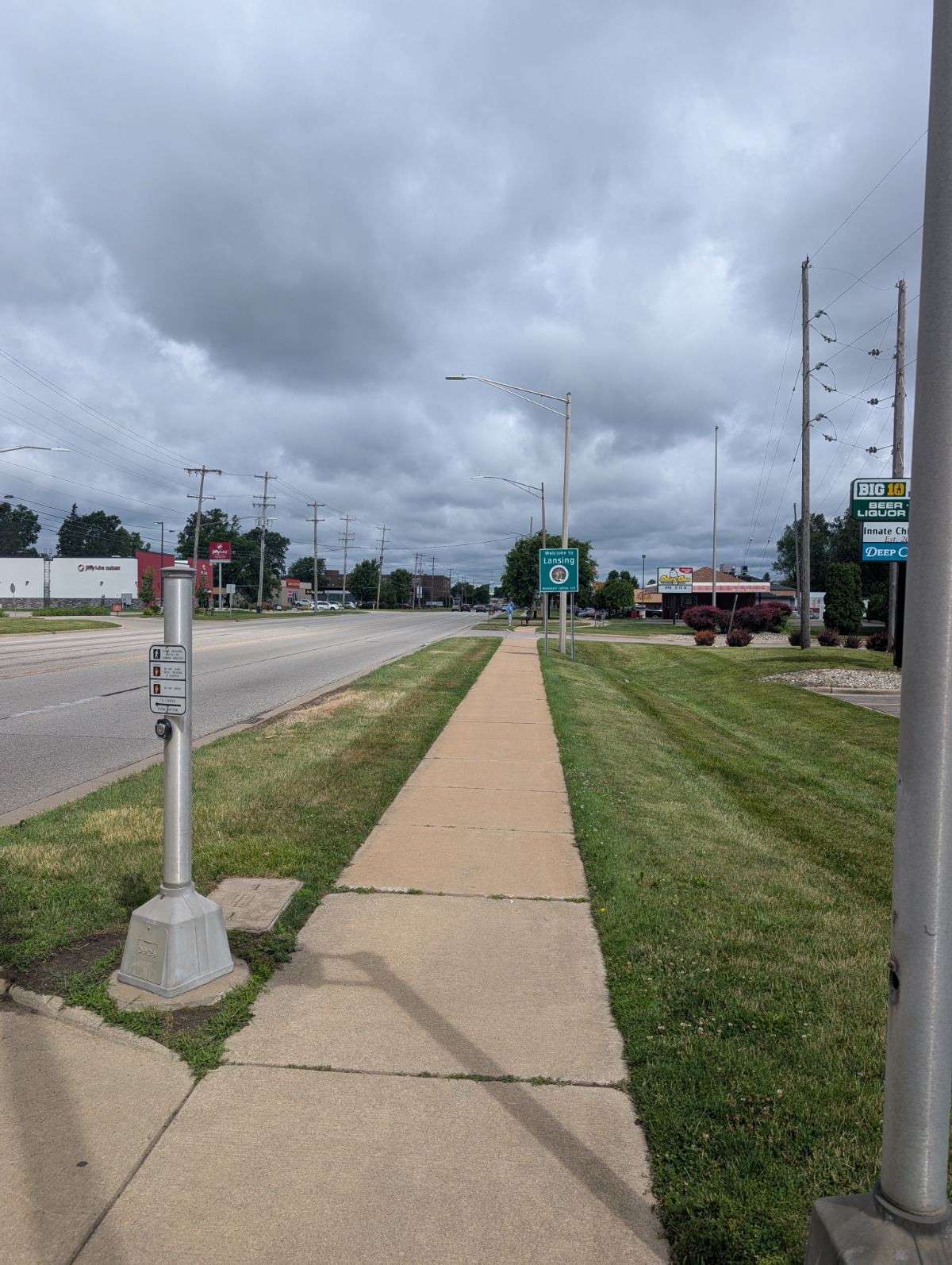
The argument (this part is opinion)
A traffic model optimizes throughput — cars per hour, the number a machine can score. It cannot score the thing that actually makes a place worth living in: did you know your neighbors’ names? We let the machine-scorable number (flow) win over the human-scorable one (belonging), poured the second one into a parking lot, and wondered why everyone felt alone. The whole museum’s creed, in asphalt: the number a computer can rank is not the same as the thing a human can feel.
The fix isn’t banning cars; it’s building for people first — homes over parking minimums, sidewalks over stroads, the corner store back within a walk. More beds, less parking lots. Put the accidents back where neighbors are made. Sister rooms: Getting There, Dignity.